# Bending/fexible wood
You might want to create bending/flexible area on your laser cutting models, to make boxes or curved wood objects.
This can be done in various ways. Depending on the pattern, you could make the wood bend in 1 or 2 directions.
### 1 way bending
For hinges, curved hedges :
[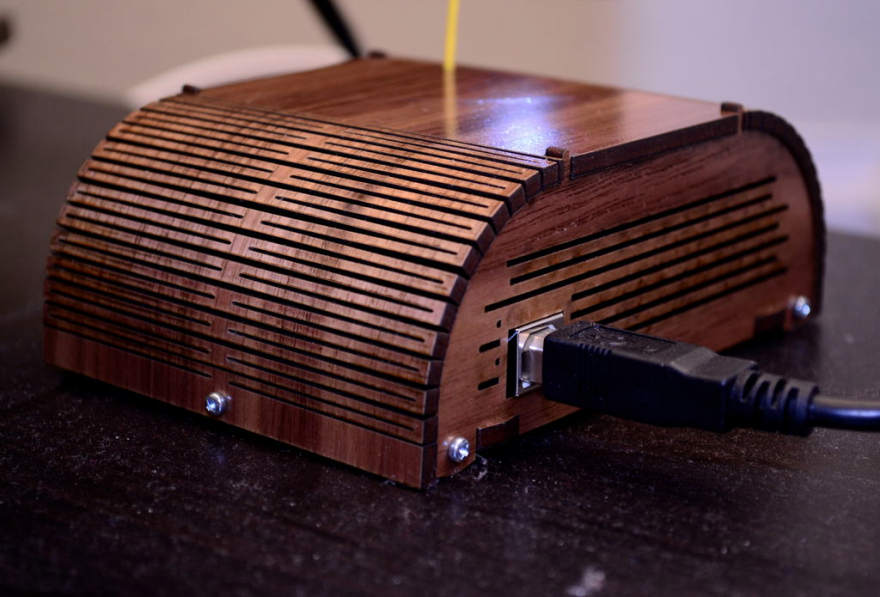](https://wiki.fablab.sorbonne-universite.fr/BookStack/uploads/images/gallery/2026-02/KtWimage.png)
[https://www.core77.com/posts/36481/adventures-in-laser-kerf-bending](https://www.core77.com/posts/36481/adventures-in-laser-kerf-bending)
As this topic is widely explored, we'll be focusing here on double curvature patterns. If you'd like to incorporate hinges similar to the one shown above into your laser-cut items, you can check out the following websites:
[https://www.rs-online.com/designspark/laser-cut-living-hinges-for-neater-designs](https://www.rs-online.com/designspark/laser-cut-living-hinges-for-neater-designs)
[https://learn.sculpteo.com/en/how-can-i-design-a-model-with-a-hinge-for-laser-cutting](https://learn.sculpteo.com/en/how-can-i-design-a-model-with-a-hinge-for-laser-cutting)
[https://3axis.co/laser-cut/living-hinge/](https://3axis.co/laser-cut/living-hinge/)
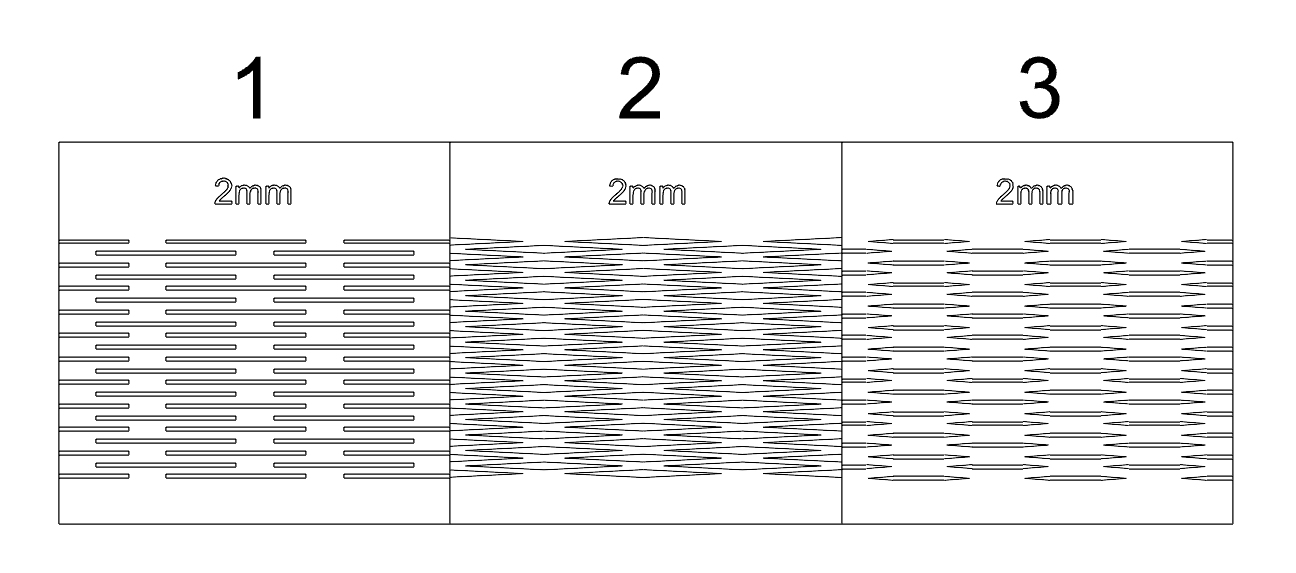
This are 3 pattern of simple hinges that we'll be testing. You can download the patterns (hinges\_2mm) and scale it down or up to adapt it to your needs.
### 2 way bending, double curvature
For flexible surfaces, more complex objects :
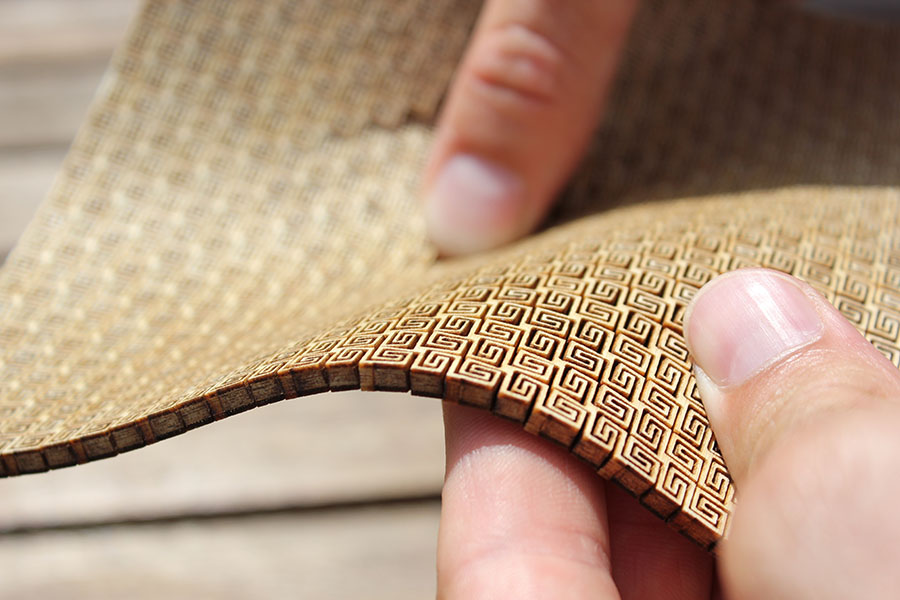
[https://lab.kofaktor.hr/en/portfolio/super-flexible-laser-cut-plywood/](https://lab.kofaktor.hr/en/portfolio/super-flexible-laser-cut-plywood/)
##### ***1. Pattern design***
Only certain types of pattern will allow the material to bend in 2 directions. Here we'll see 3 different patterns that I found online, and then recreated on Rhino8 using Grasshopper. Creating parametric designs allows you to change the size of the repeated unit, the distance between them and their shapes, without having to do it by hand.
This is the Rhino file : [double curvature pattern.3dm](https://wiki.fablab.sorbonne-universite.fr/BookStack/attachments/1695)
This is the Grasshopper file : [pattern generator.gh](https://wiki.fablab.sorbonne-universite.fr/BookStack/attachments/1694)
the first pattern, named "square" in the Rhino file :
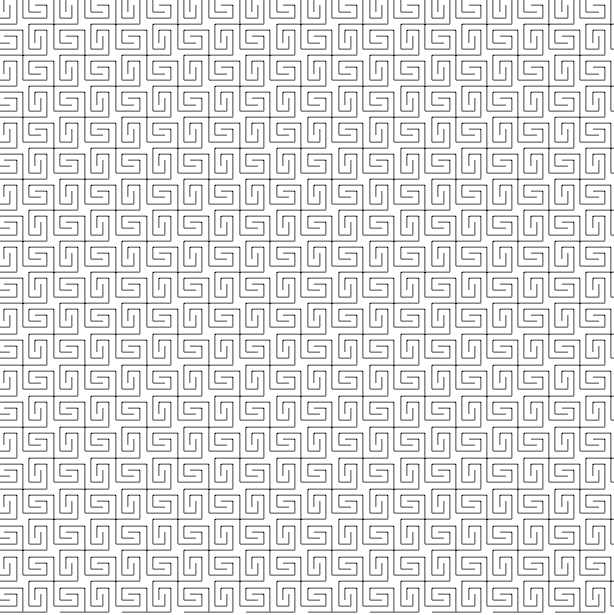(from: [https://lab.kofaktor.hr/en/portfolio/super-flexible-laser-cut-plywood/)](https://lab.kofaktor.hr/en/portfolio/super-flexible-laser-cut-plywood/))
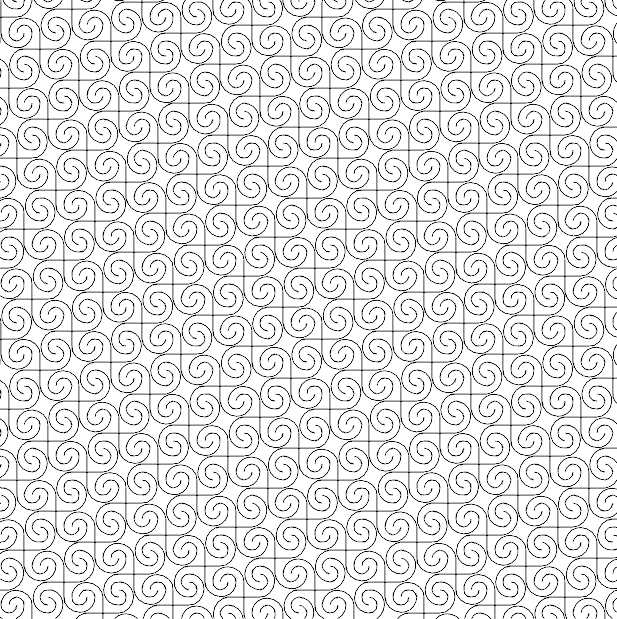
By rounding the corners, we obtain the second pattern (which I named "wavy" in Rhino)
[](https://wiki.fablab.sorbonne-universite.fr/BookStack/uploads/images/gallery/2026-03/capture-decran-2026-03-07-122215.png)
I think this one will be more fragile and difficult to cut, given that the distance between the rounded corners of each shape is really thin and prone to breaking.
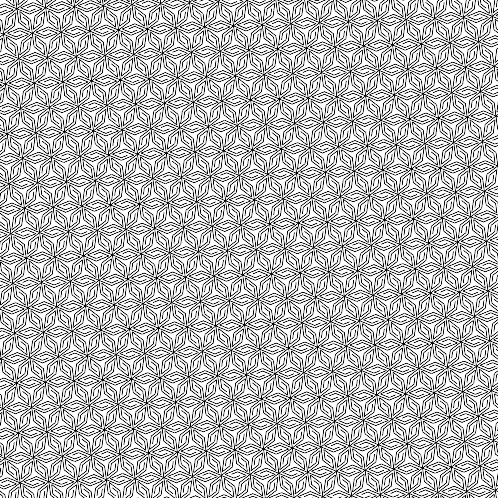
Finally, we'll also test a third pattern, which is star-shaped.
[](https://wiki.fablab.sorbonne-universite.fr/BookStack/uploads/images/gallery/2026-03/capture-decran-2026-03-07-122203.png)
##### ***2. Cutting tests***
Now, we'll be testing the patterns by cutting them in different sizes to see the reaction of the wood to bending and to test its fragility.
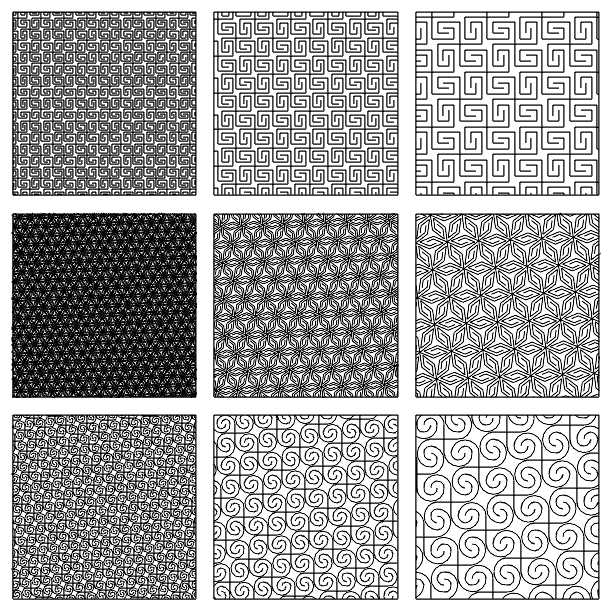
I prepared 9 different tests: each pattern in 3 sizes (1cm, 2cm, and 3cm width).
[](https://wiki.fablab.sorbonne-universite.fr/BookStack/uploads/images/gallery/2026-03/capture-decran-2026-03-08-114313.png)
We'll be working with **3mm plywood**.
[](https://wiki.fablab.sorbonne-universite.fr/BookStack/uploads/images/gallery/2026-04/whatsapp-image-2026-04-01-at-13-30-28.jpeg)
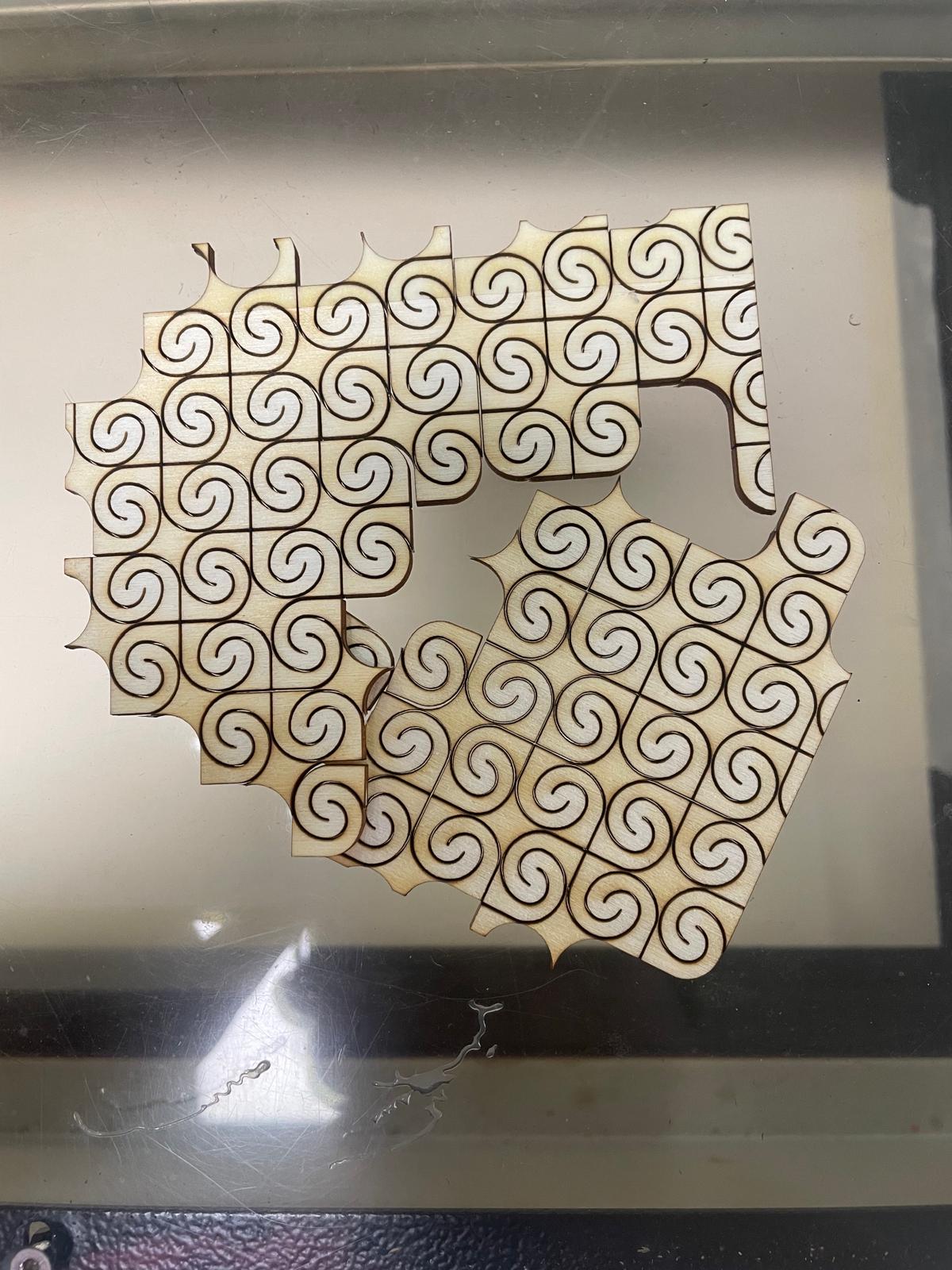
This is the wave pattern in 2cm, it didn't work, it breaks when you bend it.
[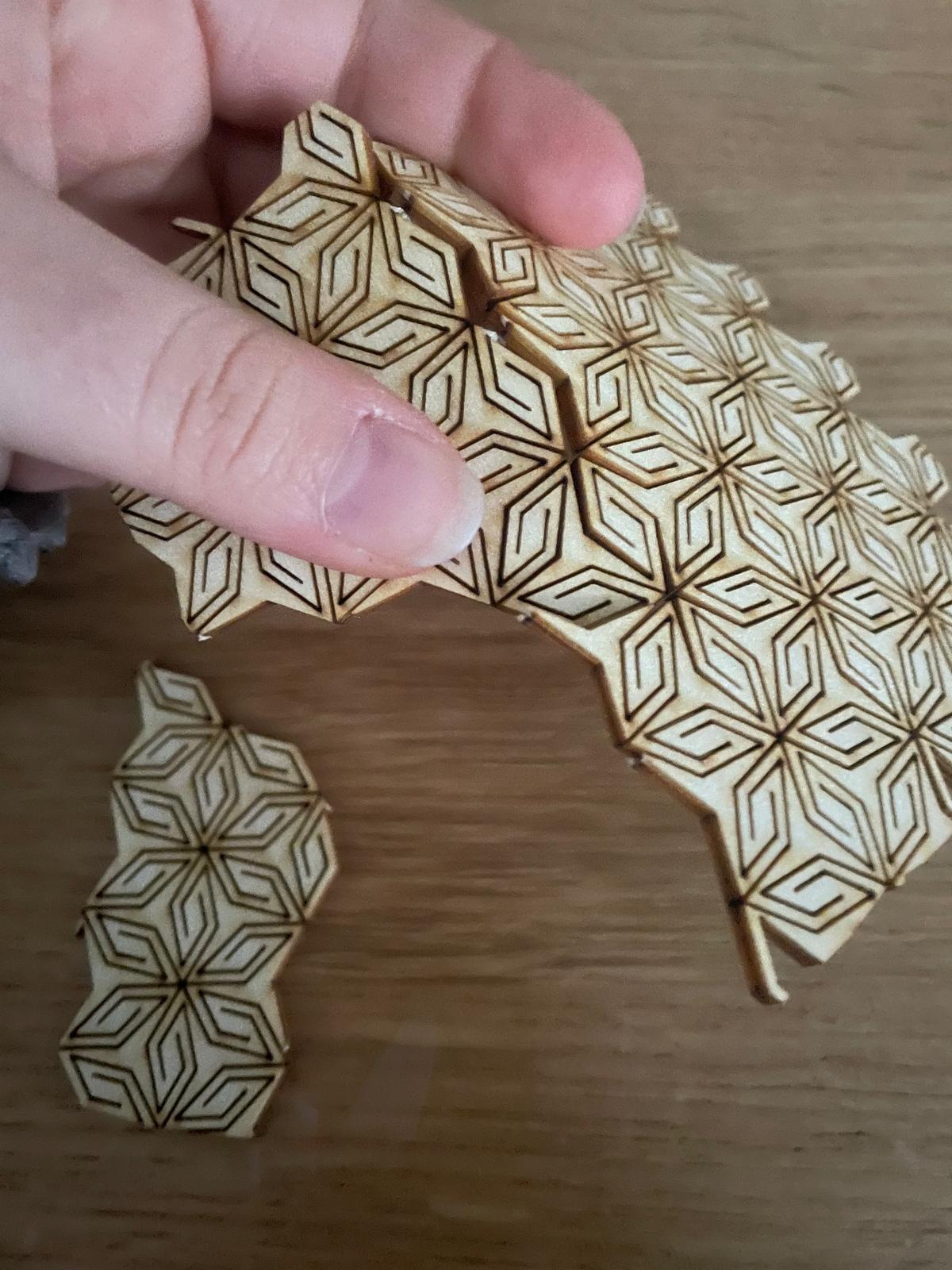](https://wiki.fablab.sorbonne-universite.fr/BookStack/uploads/images/gallery/2026-04/whatsapp-image-2026-04-01-at-13-30-29.jpeg)
Same problem with de star pattern in the same size.
Obviously, the patterns in 1cm won't work, we won't test them.